Where is this all heading?
AI is changing what we get paid for, how we get paid and where the next generation learns the job. The numbers so far, and seven guesses.

Doan Than
Founder, Wizel · · 7 min read
qio soxyc ff bkabsyvubqnfybvdattxwwuajerkivixpfmpliwqjtpkpgc
ati ienreoaac s al raw gni t o ahodiro ig wie' taonf s gt
thar i'm butten is whe the le wons wons goolethe cal hole do
the busywork the whole month of claude sessions so often i think it isn't
No person wrote any of those lines. A tiny program made them from the words in an early draft of this post, and each line is a little less random than the one above it. This is how ChatGPT and Claude work.
Probably the biggest technology shift since… well, since we discovered petrol and started industrialising. As we quickly become the second most intelligent species on the planet, let's look at some numbers for this shift.
Five tech companies now invest more each year, much of it in the machines that run ChatGPT, Claude and the rest, than the whole world invests in producing oil and gas, says the IEA. This year Amazon, Alphabet, Microsoft and Meta alone will spend between $720 billion and $745 billion, by their own guidance. That's almost two and a half Apollo programs (the whole moonshot cost $309 billion in today's dollars) in one calendar year. I run several ChatGPT and Claude sessions most days to build Wizel, so I'm part of the reason (my accountant thinks I've hired staff).
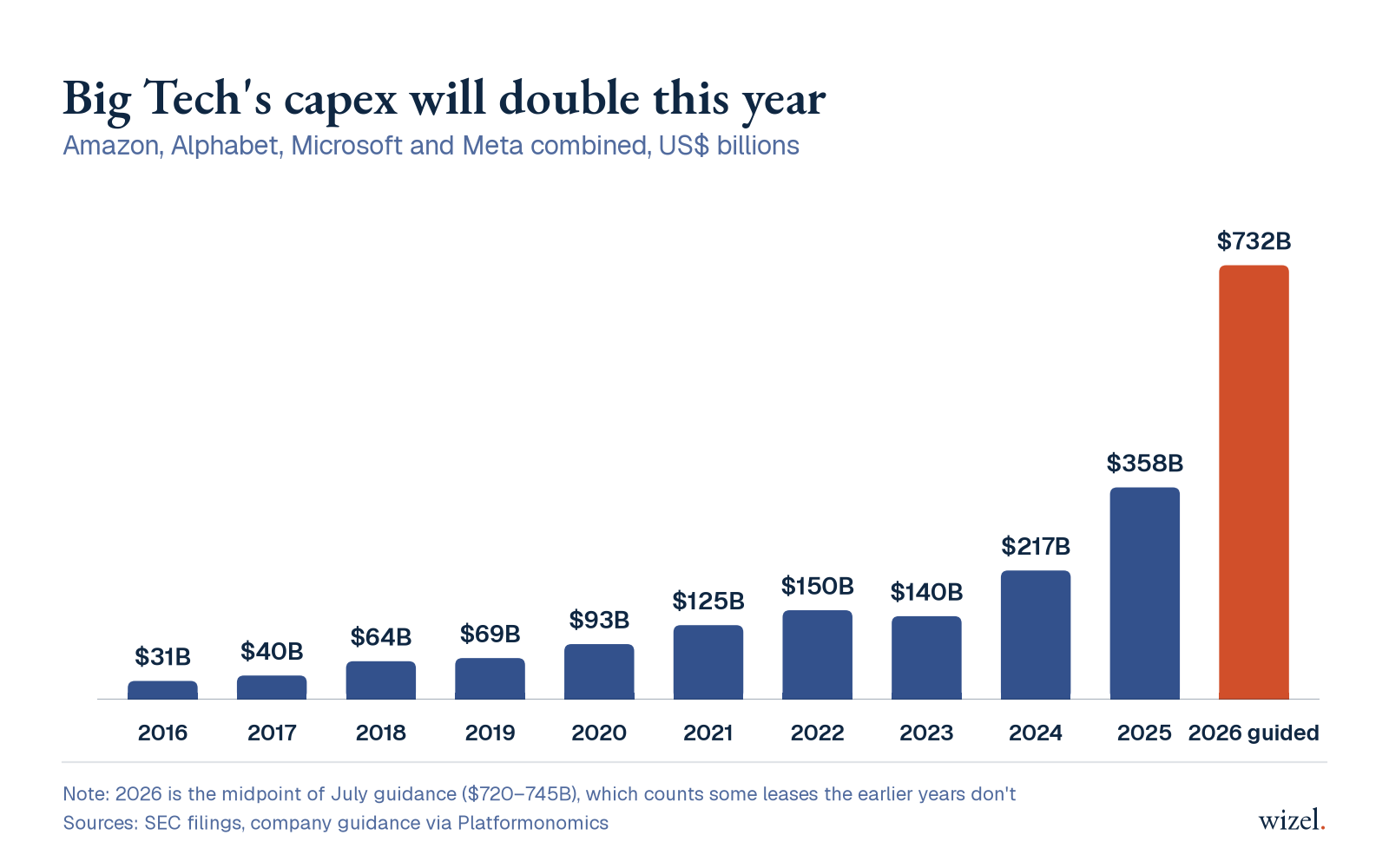
I believe where this is heading comes down to three questions about work: what people still get paid for when a first draft costs almost nothing, how they get paid when an hour's work takes a minute, and where the next generation learns the job.
I mean, this article took me 15 minutes- it would have taken me a day (and it would have been a lot shittier) one year ago.
Hired Help
More than half of American workers now use AI in their jobs, 52% when Gallup asked in May, up from 21% in 2023. The people who feel it first are the ones who sell their work by the job. A record 74.9 million Americans now earn money independently, and here in Australia 1.1 million people, 7.6% of everyone employed, are independent contractors.
Within eight months of ChatGPT's launch, job posts for writing and coding on freelance platforms fell 21% compared with hands-on jobs, and posts for image work fell 17%.
Upwork, the biggest of those marketplaces, shows both halves at once. The work booked through it shrank 4% in the second quarter while AI-related work grew more than 22%, and its chief executive says "lower-complexity work continues to shift toward automation." Freelancers doing AI work there earn 36% more an hour.
We've been here before. As ATMs spread, the number of tellers in an average city branch fell from 20 to 13. Banks used the savings to open 43% more branches, so teller jobs held up while the work moved from counting cash to talking to customers. It didn't last forever: teller jobs are now expected to fall 13% over the next decade as branches close.
My bet is most jobs bend before they break, and the bending is where the next decade of careers gets made.
Race to Zero
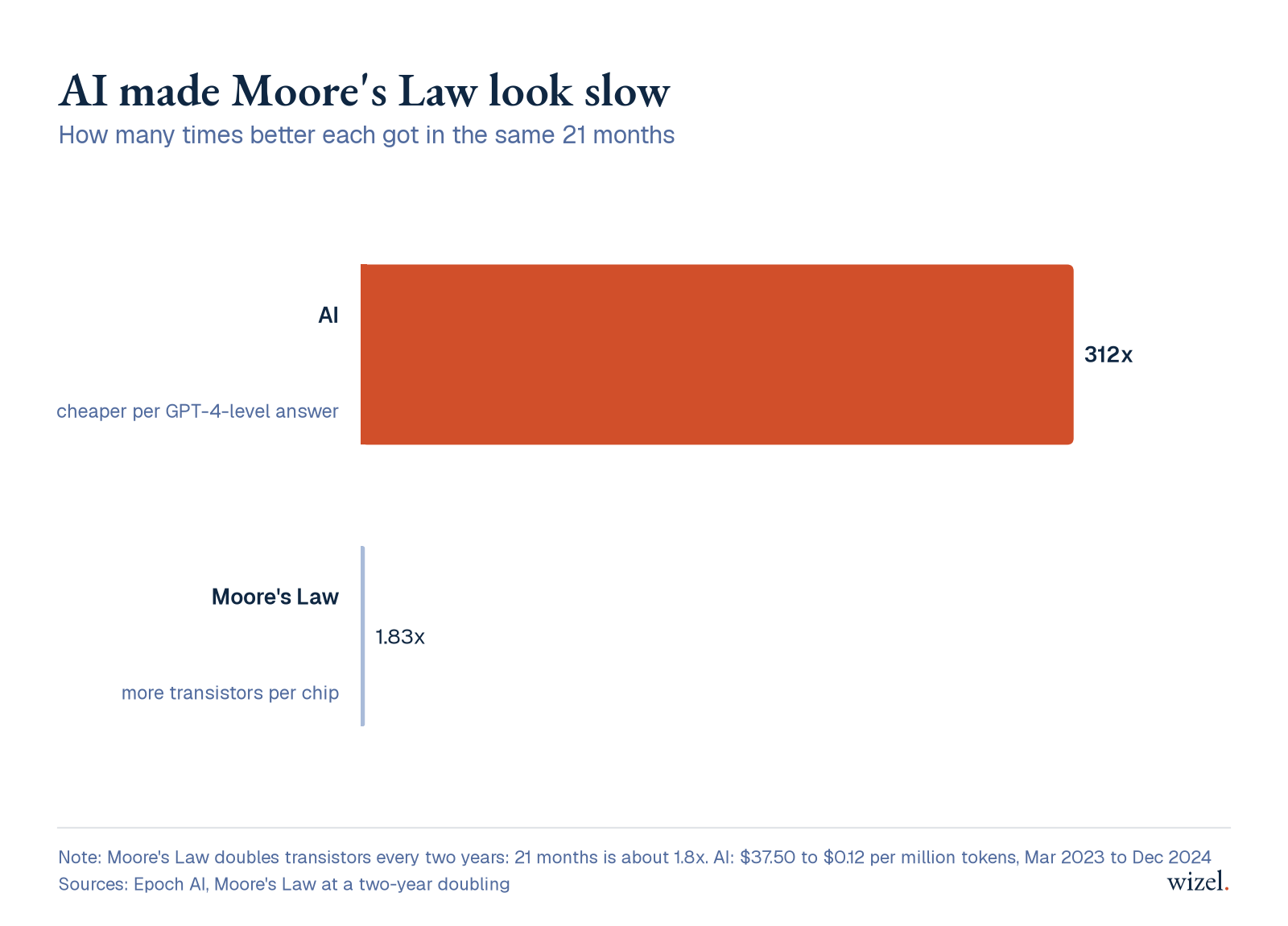
The price of a guess is falling on a schedule that would embarrass Moore's Law. An answer as good as GPT-4 got about 300 times cheaper in 21 months, according to Epoch AI.
Moore's Law doubled the transistors on a chip roughly every two years, and we called that a revolution.
At that pace, AI feels like evolution on fast-forward.
I remember coding my first line of Wizel. I wrote a for loop, some useEffects and wasted 1 day. Thank god those days are over.
Machine Readable
The first reader of your marketing is often a machine now. ChatGPT passed 900 million weekly users in February, and when Google shows an AI summary, people click an ordinary result on 8% of visits against 15% without one, Pew found. Shoppers sent by AI used to be the worst visitors a store got. In March 2025 they converted 38% worse than everyone else, and by July this year they converted 60% better, by Adobe's count.
Think about what that means for a brand. An agent skims the welcome flow, the product pages and the carefully tested hero image in seconds. It compares you with a few dozen competitors and recommends whoever has the clearest data, the best offer and the fewest reasons to doubt them. We spent two decades writing for Google's crawler, and the next decade belongs to whoever is easiest for a machine to read, trust and recommend.
Jobs
Some work is going away, and it's going first for the young. Employment of 22-to-25-year-olds in the jobs most exposed to AI has fallen 19% behind young people in less exposed jobs, Stanford researchers found, mostly because companies hired fewer of them. Experienced workers show no such gap. In March, Atlassian, the pride of Australian tech, cut 1,600 jobs partly to pay for more AI.
My guess is the work moves up a level. Fewer people make the first draft, and more people decide what to make and whether it's any good. If an agency's emails make themselves, the month can go on the clients instead. That's the call where you work out what a brand needs this season, and the moment you talk a founder out of a bad offer. It's a better job and a harder one, and the junior roles where people used to learn it are the ones disappearing.
Seven Guesses
Here's where I think it goes next. I'll come back to these in a year and see how wrong I was.
- 1.Agents will start acting first, and memory will decide who wins. Today you ask an AI to do something. Soon it will notice your flight is delayed and rebook you before you've read the email. That only works if it knows a lot about you, so I believe the AI that remembers the most about you wins, and the smartest model matters less than people think.
- 2.Agents paying for things goes mainstream in 2027. It still feels futuristic, and the first tries have been clumsy (OpenAI has already pulled back on checkout inside ChatGPT once). But the fight has started, with some big platforms blocking outside agents while others open the door.
- 3.If you bill by the hour, AI is cutting your pay. In my first months coding I spent 1 week learning the Stripe API. I'd do it in three minutes now. An agency billing hourly earns a fraction of what it used to for the same job at the same rate. I think agencies move to charging per project or per result, and the ones that switch first keep the upside.
- 4.Founders used to brag about headcount. Now they brag about revenue per person. One person billion dollar companies sound far fetched, but I'm fairly sure there will be 3 or 4 person billion dollar companies coming up.
- 5.The advice for graduates has changed. "Follow your passion" has had its day. I'd tell them to follow work that lives outside documents, rulebooks and anything a computer can easily check, because judgment, relationships and taste get more valuable every month. If there are any graduates left- ChatGPT might be the best university tutor on the market.
- 6.Nobody's talking about retention. Unicorns brag about $1 billion in revenue inside a year, and nobody talks about how many of those customers stay. I think we'll hear plenty of stories about AI companies with huge revenue and terrible retention.
- 7.Trust will be the slowest thing to build and the hardest to copy. Plenty of people outside tech are angry about AI, and you can hear the big labs changing how they talk about it, toward giving people time back and curing diseases. The companies that earn trust over the next few years get a head start that takes years to catch.
Owned
If intelligence is cheap and the first reader is a machine, what's scarce? The customers who chose you, the judgment to know what's good, and your time. Own the data, because an agent can buy from anyone, and a brand's list, purchase history and the preferences customers shared directly are the one thing a competitor can't copy.
For agencies and any business, production is about to be priced at the cost of tokens, so the work worth paying for is the plan, the taste and the results.
P.S. If you'd rather spend tokens than weekends on email, Wizel plans your month and makes the whole month of emails in your brand's own voice. We're letting people in from the waitlist now: join the waitlist.